
Have an account? Log in
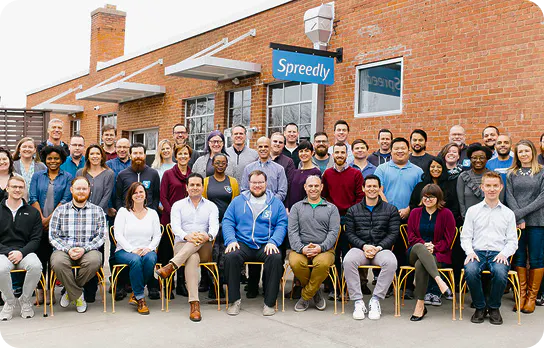
A US go-to-market search, run with the discipline of an engineering one
Spreedly needed commercial leaders in the US payments market. We wrote a six-point scorecard before contacting anyone, mapped the companies that actually resemble theirs, and half of everyone we approached cleared all six.
 1 in 2Sourced candidates met every criterion
 193Candidates mapped across 27 US states
 6People now reporting to the Director we placed
What Spreedly says about us
Quickly calibrated to our open hiring needs, which resulted in hiring at a Director level for our GTM team. Great communication and realignment to ensure good matches on the roles we partnered on.

Dana Calder
Hed of People

4.9/5 on
TL;DR
- Who. Spreedly, a US payments orchestration platform. It sits between merchants and the payment service providers, gateways and fraud tools they use, so a business can run many payment providers through one integration. Profitable, and moving from product-led growth into a sales-led motion.
- What they needed. Not engineers. Four go-to-market roles: a Director of Account Management, an Enterprise Account Manager, an Enterprise Account Executive and a Partner Growth Manager. All US-based, all remote, most of them East Coast.
- Why it was hard. "Account Manager" describes a hundred different jobs. The person Spreedly needed had to have sold a technical product to technical buyers, in payments or payments-adjacent, at enterprise deal size, with real tenure behind them. That combination is not searchable by job title.
- What we did. We defined the profile as six explicit criteria before contacting anyone, used AI sourcing to map the companies that resemble Spreedly by business model rather than by industry label, and scored every candidate against all six in a tracker their own team could see and write into.
- What happened. 193 candidates mapped across 27 states, 97 of them clearing every one of the six criteria, and a Director of Account Management hired into a role leading a team of six.
About Spreedly
Spreedly runs payments orchestration. Instead of a merchant integrating separately with every payment service provider, gateway and fraud tool it wants to use, it integrates once with Spreedly and routes through them. That makes Spreedly a technical product sold to technical buyers, and it makes its partnerships with PSPs and fraud providers a core part of the business rather than a side channel.
The company had grown product-led and was building a sales-led motion on top of it: a commercial organisation with account management split across SMB, mid-market and enterprise, and a partnerships team working existing PSP and fraud relationships. The four roles came out of that shift.
They came to us through a person we had placed. An HR director we recruited for another client knew Spreedly's talent lead, and made the introduction. It is the second time in this client set that somebody we placed has become the door into a new account.
The brief
Four go-to-market roles inside one fixed-term engagement. A Director of Account Management to lead a team of six across SMB, mid-market and enterprise, an Enterprise Account Manager, an Enterprise Account Executive weighted heavily to outbound, and a Partner Growth Manager for existing PSP and fraud partnerships. US-based and remote, with the location requirement varying by role.
The 4 problems we had to solve
Problem #1: "This is not an engineering search."
Most of what a technical recruitment partner is asked for is engineers. This was the commercial organisation: account management, enterprise sales, partnerships. Different market, different signals, different way of reading a CV. The risk in that situation is that a technical recruiter treats a sales search as easier, because the vocabulary is more familiar, and screens on charisma rather than on evidence.
What we did
We ran it exactly like a technical search. A written hiring kickoff document per role, taken from the client directly, covering why the hire exists, what the person will own, who they will manage and what defines success. For the Director role that meant an explicit statement that expansion mattered more than retention, that the product is sticky and therefore needs a commercial rather than a caretaking leader, and that the team is six people split across three segments. That document is the reason the search had criteria rather than impressions.
Problem #2: "The right person is defined by where they have worked, not by their job title."
An account manager at an enterprise SaaS company and an account manager in payments do not do the same job. Spreedly needed someone who had sold a technical product to technical buyers, in payments or payments-adjacent, at enterprise deal size. Searching by job title returns thousands of people, almost none of whom fit.
What we did
We mapped the companies first, then the people. Using AI sourcing tools alongside LinkedIn Recruiter, we built a picture of the businesses that genuinely resemble Spreedly, by size, by the kind of contracts they sign with customers and by how they structure partnerships, rather than by industry label. Then we searched inside those companies. It is a slower way to start a search and it is the reason the shortlist was made of people who could hold the conversation.
Problem #3: "Every candidate has to be measurable against the same bar."
Commercial hiring goes wrong when nobody writes down what "good" is. Four roles, two people sourcing, and a client team reviewing means four different mental models unless the criteria are explicit.
What we did
We wrote six criteria and scored every single candidate against all of them: payments or fintech background, five or more years in account management, expansion and upsell experience, having sold to technical buyers, enterprise deal experience, and genuine tenure of two or more years per role. 193 candidates went into the tracker with a verdict against each. 97 cleared all six, which is one in every two people we approached. On a search where the job title tells you nothing, a hit rate that high is the whole return on writing the criteria down first, and it means a shortlist can be argued with on the evidence rather than defended on instinct.
Problem #4: "We do not want to receive CVs. We want to be in the process."
Spreedly's talent lead did not want a supplier emailing profiles from outside. He wanted visibility into the search as it happened, and he wanted to be able to act inside it himself.
What we did
We opened a shared Slack channel with both teams in it and ran the search in the open, sending candidates through as we interviewed them. The tracker went further: alongside our own outreach we logged his, so the sheet recorded who had contacted each person, through which channel, on what date, and what came back. Connection request, email and InMail were tracked separately per candidate, per sender. Nobody got contacted twice by two different people, and neither side had to ask the other where anything stood.
How we actually ran it
- A written hiring kickoff per role. Why the hire exists, the team they inherit, what defines success, the location constraint, taken directly from the client.
- Six sourcing criteria, agreed before any outreach. Written down, applied to every candidate, with a verdict recorded per person.
- Company mapping before people mapping. AI sourcing tools plus LinkedIn Recruiter, used to find businesses comparable to Spreedly by model rather than by sector, then sourcing inside them.
- Outreach logged by channel and by sender. Connection request, email and InMail, tracked per candidate, including the client's own outreach.
- A shared Slack channel. Both teams in it, candidates sent through as they were interviewed, feedback in the same place.
- A fixed-term engagement. Four searches in a defined window rather than an open-ended retainer.
What Spreedly ended up with
A Director of Account Management hired into a team of six, in a market where the title alone tells you nothing.
A map of 193 people in the US payments market across 27 states, scored and left behind as an asset rather than a set of forwarded CVs.
One in every two people we approached meeting all six criteria, on a search where the job title is no guide at all.
Six written criteria that turned a commercial search into something reviewable rather than intuitive.
A market map of the companies that actually resemble theirs, built by business model rather than by sector.
Visibility into the search as it happened, in their own Slack, with their own outreach tracked alongside ours.
A fixed-term engagement with a defined end, rather than a retainer.