
Have an account? Log in
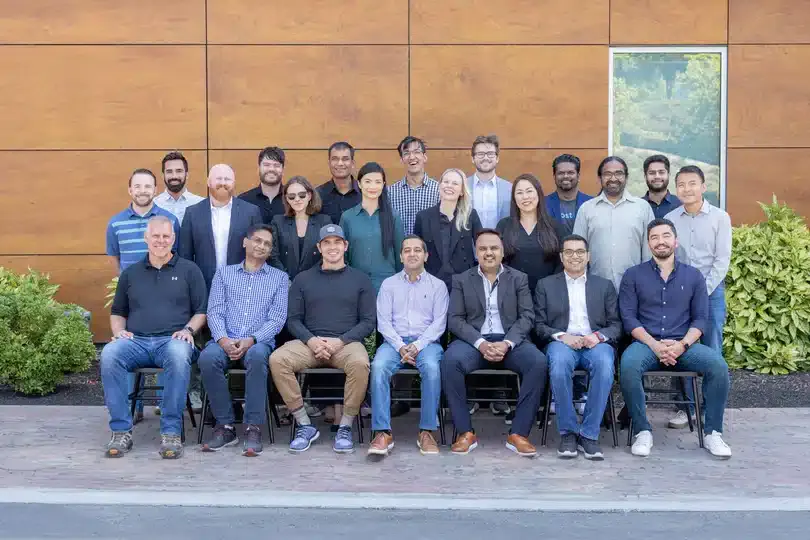
The team a startup had to build before its investors would sign
BoostUp needed people in the building fast enough to show a Series B round what it was funding. We placed nineteen across nine countries, thirteen of them before the round closed.
 19Hires, named and documented
 9Countries, Uruguay to India
 13Before the round closed
TL;DR
- Who. BoostUp.ai, a revenue operations and intelligence platform used by Teradata, Udemy, Iterable, Degreed, Contentsquare and Workato. Founded by Sharad Verma. It raised a $28.5M Series B led by NGP Capital in March 2022, taking it past $40M raised and past 100 employees. It has since rebranded as Terret.
- What they needed. A quarter with 39 open roles on the plan: backend in Python, frontend in React, manual and automation QA, DevOps, IT support, mobile, InfoSec. Fully remote, hired wherever the right person was, and fast, because the team had to exist before investors would fund it.
- Why it was hard. The deadline was not a hiring deadline, it was a funding deadline. They were already working with four agencies and had nobody inside coordinating them. And the engineering bar could not move, because their own engineers set the pass mark.
- What we did. We put a recruiter inside the company as their internal recruiter. He ran the agency panel as well as our own searches, screened every candidate from every source to one standard, and managed the whole process to offer. We also placed a five-person frontend team in one go.
- What happened. Nineteen people placed across nine countries between January and June. Thirteen of them started before the round was announced on 29 March.
About BoostUp
BoostUp.ai builds a revenue operations and intelligence platform. It pulls data from CRM, email, calls and calendars to give sales teams accurate forecasting, standardised process and predictable revenue. Its customers include Teradata, Udemy, Iterable, Degreed, Contentsquare and Workato, and it reported tripling revenue in 2021.
In March 2022 it raised a $28.5M Series B led by NGP Capital, with Canaan, Emergent and BGV, plus angels from HashiCorp, Twilio, Apttus and Datadog. That took total funding past $40M and the company past 100 employees. It has since rebranded as Terret and moved into AI revenue agents.
The engineering organisation was distributed before that was normal: managers in California, teams in India, engineers across Latin America and Eastern Europe. It is also the relationship that later brought us Vidoso, the founder’s next company.
The brief
Fill a quarterly hiring plan of 39 roles, fully remote, wherever the right person happened to live, on a timeline set by a funding round rather than by the hiring team. Take over coordination of the agencies already working the roles, run the screening for all of them to one standard, and manage candidates through a five-stage process to signed offer.
The 5 problems we had to solve
Problem #1: “The deadline is not ours. It is the investors’.”
BoostUp was raising a Series B and needed the organisation the round was funding to visibly exist. The quarterly plan listed 39 roles: 13 backend engineers, 6 frontend, 5 manual QA, 3 automation QA, 5 IT support, 2 DevOps, 2 L1 ops, 2 mobile and an InfoSec hire. A normal hiring cadence would have delivered that comfortably after the money was needed.
What we did
We treated it as a sprint with a written plan rather than a queue of vacancies. The quarter had a documented strategy per channel: referrals with a bonus from $1,000, a rebuilt careers page, premium job boards, tech communities, paid ads, direct outreach and a placed frontend team. Thirteen of the people we placed started before the round was announced on 29 March, and nineteen by the end of June.
Problem #2: “We have four agencies and nobody running them.”
BoostUp was already buying from recruitment agencies in India, Ukraine and South America, plus an outsourcing partner. Candidates arrived from all of them, screened to four different standards, into an ATS nobody owned. The bottleneck was not supply. It was that nothing was being filtered consistently before it reached an engineer’s calendar.
What we did
Our recruiter became their internal recruiter, and that included running the panel. He held the agency calls, briefed them on each role, and then screened every candidate from every source himself, ours included, to one standard. He owned the ATS and the scheduling. It is a different job from recruiting, and it is the reason a company with four suppliers still only had one set of interview notes to read.
Problem #3: “Every team is in a different time zone.”
The engineering managers were in California and effectively online from four in the afternoon Lisbon time. Other teams were run out of India and started earlier. A candidate who worked for one team was unworkable for another, so “remote” was not one requirement, it was a different requirement per team.
What we did
We matched candidates to the team rather than to the company. Each search started from which squad the person would join and what hours that squad actually works, and the sourcing was pointed at the regions that fit. The nineteen placements came from India, Brazil, Argentina, Uruguay, Portugal, Turkey, Germany, Belarus and Bosnia, and each one was chosen against a specific team’s working day.
Problem #4: “We do not need one hire. We need a team.”
Some of the plan was not fillable one person at a time. A frontend squad needed to arrive together and start together, and hiring five people sequentially through a standard permanent process would have taken the entire quarter on its own.
What we did
We placed the frontend team as a unit. Five engineers, from Brazil, Belarus, Portugal and Bosnia, all with signed statements of work, starting between 24 January and 28 February. That ran in parallel with the permanent placements rather than instead of them, so the two models were live at the same time on the same plan.
Problem #5: “Fast cannot mean lowering the bar.”
The technical standard was set by BoostUp’s own engineering managers, not by the recruiter. A Codility test with an 85% pass mark, then three final calls in sequence: engineering manager, then an engineer, then the VP who signed the offer. Sending a candidate who could not clear that was expensive for everyone, and at this pace it would have happened constantly.
What we did
We put a full screening interview in front of the test rather than a CV pass. English, background, motivation and technical questions built for the role, so that anyone reaching the Codility stage had already been assessed by a person. The pass mark stayed where the engineers set it. The test itself was written by their engineering team on a platform we set up, so the standard was theirs and the throughput was ours.
How we actually ran it
- A written hiring plan for the quarter. Every open role by discipline and count, plus a channel strategy: referrals, careers page, job boards, tech communities, social, paid ads, direct outreach and a placed team. Reviewed as a plan, not as a list of vacancies.
- A role intake with the hiring manager. Their VP flagged the role and named the owner; we took the brief from that person directly.
- One brief out to the whole panel. Our own sourcing and the agencies got the same requirement at the same time, with ATS access so everything landed in one pipeline.
- Every candidate through our screening interview. Whatever the source. Same questions, same notes, same bar. Nobody reached an engineer without it.
- Then the client’s technical gate. A Codility test written by their own engineers, 85% to pass, then engineering manager, engineer and VP in sequence, then the offer.
- Three commercial models running at once. Permanent placement for most roles, Team-as-a-Service for the frontend squad, and employer of record where it fitted. All on the same plan, in the same quarter.
What BoostUp ended up with
Nineteen people placed in six months, thirteen of them starting before the Series B was announced.
Hiring across nine countries, each candidate matched to the working hours of the team they joined.
A frontend squad of five that arrived and started together rather than one at a time.
One screening standard applied to every candidate from every supplier, not four.
An agency panel that someone inside the company was actually running.
The technical bar left exactly where their engineers set it, at an 85% pass mark, while the pace went up.