
Have an account? Log in
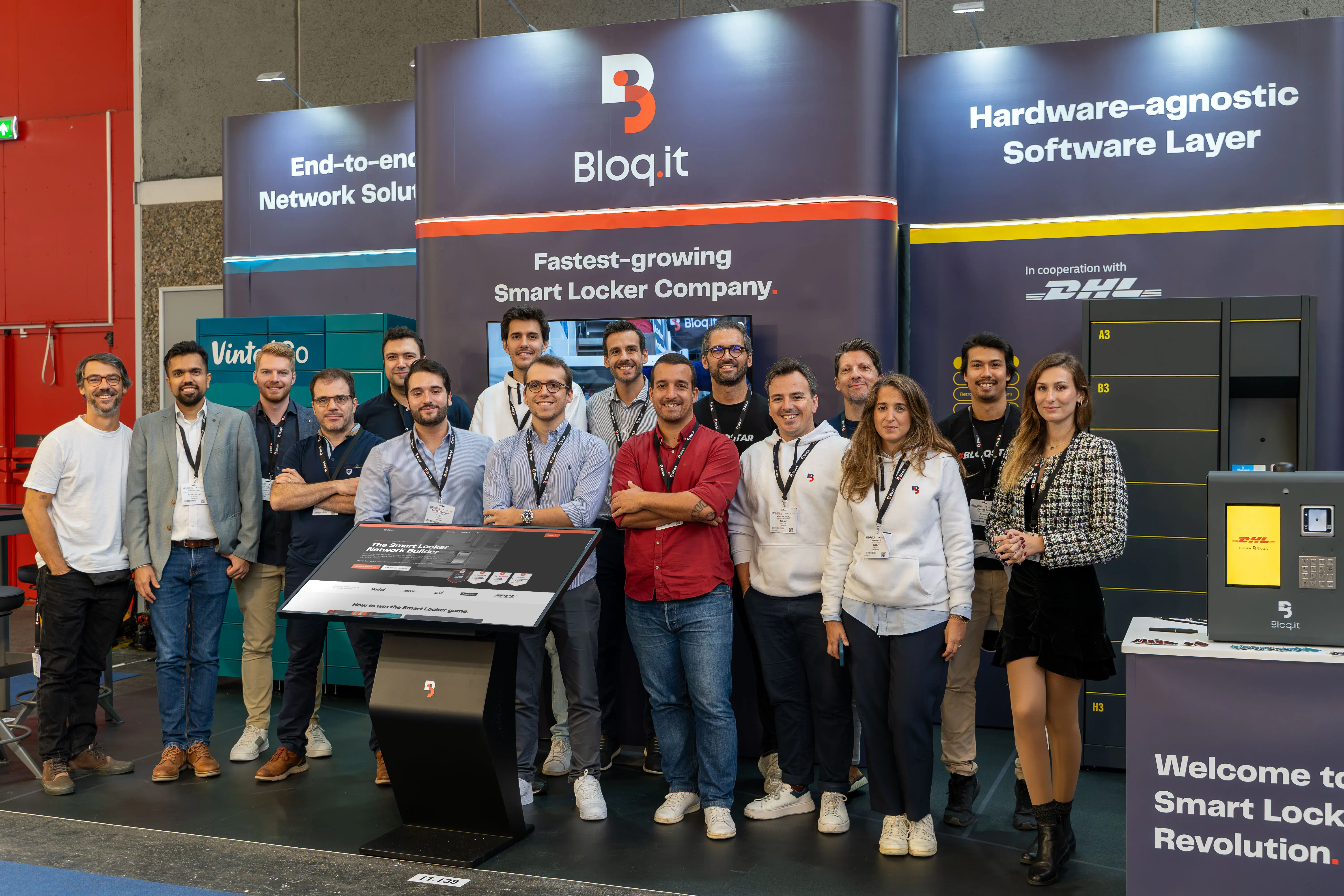
How Bloq.it hired across eleven disciplines and six countries with three of our recruiters inside the team
Two and a half years embedded in one of Europe's fastest-growing hardware startups, hiring firmware engineers, VPs and field technicians in the same week.
 ~50Hires by one embedded recruiter
 18Open roles at peak, per recruiter
 11Disciplines, from firmware to field operations
TL;DR
- Who. Bloq.it, a Lisbon company building smart parcel lockers and the software that runs them. Its lockers power networks for Vinted, DHL and Poste Italiane. It raised a €28M Series B, one of the largest in Portugal, and grew from a small team to over a hundred people.
- What they needed. More hiring capacity than an internal team could carry. When we started, their one recruiter was booking interviews six weeks out and the company had already decided to keep growing.
- Why it was hard. Not one function. Software, firmware, mechanical and electronic hardware, product, design, QA, support, field operations, leadership. Across Portugal, France, the UK, Spain, Italy and Germany. Most of it remote, some of it necessarily on site.
- What we did. We stopped sending CVs and moved inside. One recruiter first, three within three months, working four days a week from inside their talent team, on their tools and in their weekly pipeline review. We also rewrote how the hiring process itself worked.
- What happened. Around fifty hires from one of our recruiters alone, roughly two a month sustained across two and a half years, at a peak of eighteen open roles each.
About Bloq.it
Bloq.it builds smart parcel lockers, both the physical units and Bloq.it OS, the platform that runs a locker network at scale. Its lockers sit behind parcel networks for Vinted, DHL and Poste Italiane, and it calls itself the fastest-growing smart locker company in the world. It is based in Lisbon, at Parque das Nações, with operations in France and the UK, and it raised a €28M Series B in one of Portugal's largest rounds. Founded by Miha Jagodic, João Lopes and Ricardo Carvalho.
Being a hardware company changes the hiring problem. Alongside the software team there are mechanical designers, electronics engineers, ECU specialists, firmware developers and industrialisation leads. And because the lockers physically exist in the street, there is a whole field organisation in every country they open: installation, maintenance, logistics, none of which can be done remotely.
They came to us as a normal client, and we sent them candidates. What changed the engagement was a dinner in Coimbra with their Head of People, where we proposed putting a recruiter inside their team instead.
The brief
Give Bloq.it the hiring capacity of a much larger talent team, without them building one. Cover every function in the company, in every country they were opening, and keep pace with a business that hired over two hundred people in its biggest year. We ran the searches end to end: intake with the hiring manager, sourcing, first interviews, and managing the candidate through their process to signing.
The 5 problems we had to solve
Problem #1: "We are hiring faster than one recruiter can interview."
Bloq.it had one internal recruiter and a plan to keep growing. His calendar was booked a month and a half ahead. The bottleneck was not sourcing or budget, it was interview hours, and no amount of CV forwarding from an agency was going to fix that.
What we did
We put a recruiter inside the team rather than outside it. Daniel Antão onboarded in a day and picked up seven open roles in his first week. By February there were three of us embedded, roughly four days a week each, sitting in their weekly pipeline review and working their ATS as if we were staff. The billing sheet for that period shows it: four recruiter-days in December, sixty in February.
Problem #2: "Half our engineering team is not software."
Bloq.it makes a physical product. The hardware team was four people and needed to become four teams: mechanical design and simulation, electric systems, ECU, and industrialisation. That is a talent market with different job titles, different seniority signals and a far smaller candidate pool than backend engineering.
What we did
We took the whole hardware function. One of our recruiters owned every hardware hire, from electronics and mechanical design through firmware and testing, and learned the market properly rather than treating it as a variant of software recruiting. It is the reason the same team could run a firmware search and a React search in the same week without either being an afterthought.
Problem #3: "We are opening in six countries at once."
As the locker network expanded across Europe with Vinted and other partners, Bloq.it started building operations in France, the UK, Spain, Italy and Germany. Those roles are field roles. Installing and maintaining lockers is physical work that happens where the lockers are, so remote hiring was not an option and neither was hiring it all from Lisbon.
What we did
We recruited in-country and in-language. The UK operations structure was built almost entirely by one of our recruiters. For France we ran a dedicated French-speaking pipeline, sourcing recruiters and operations people who could work in French, tracked as its own search with over a hundred profiles. Field managers, maintenance, logistics, each hired local to the site they would cover.
Problem #4: "We need VPs, not just engineers."
Once the departments existed, Bloq.it needed people to lead them. VP of Hardware, Head of Software Engineering, Head of Mechanical Engineering, Head of Industrialisation. Those searches are not volume work. The VP of Hardware brief was €100k and up, with the CTO and the CFO both acting as hiring manager, and a mandate to design the structure of the hardware organisation.
What we did
We moved leadership hiring to our most senior recruiter and ran it as a separate track: a written intake with the founders, targeted headhunting rather than inbound, and full candidate feedback documents shared back for each finalist. The searches took longer and involved fewer people on purpose. One candidate had run a UK business as CEO before.
Problem #5: "The process itself is the constraint."
By this point we had enough visibility to see that adding hours would not be enough on its own. Roles were being opened without a written definition of what was wanted. CV review sat with hiring managers who were already stretched. There was no cap on how many roles a recruiter could carry at once, so everything moved slowly at the same time.
What we did
We wrote them a new process and argued for it. A role intake document a hiring manager has to complete before a role can open. A fixed window to collect inbound applications before deciding whether a role needs outbound sourcing. CV review moved to the talent team, who now had the intake document to judge against. A kanban limit so no recruiter carries more than three roles in active interviewing. Scheduling links from every hiring manager instead of calendar ping-pong. We also helped move them off their original ATS onto Teamtailor, which was a step change on its own.
How we actually ran it
- A weekly pipeline review with their talent manager. Every open role, where it stood, what was blocking it, what got redistributed. One thorough meeting rather than a daily stand-up.
- A role intake call with the hiring manager, written up. What the role is, who it reports to, who it manages, salary, remote or on site, the interview loop. For senior roles that meant a call with the VP or the founders directly.
- Open in their ATS and let inbound run first. Bloq.it became a company people wanted to join, so inbound was strong and good. Sourcing was the answer when a role needed it, not the default for every role.
- We ran the first interview. Every candidate, screened by us before anyone internal spent time on them.
- We managed the candidate through the rest of their process. Technical stage, hiring manager, founders where relevant, through to signing.
- We fixed the process as we went. The role intake template, the kanban limit, the ATS move. All of it came out of running the thing daily.
What Bloq.it ended up with
Around fifty hires from one embedded recruiter, averaging two a month across two and a half years.
Three recruiters inside their talent team within three months of starting, without hiring three recruiters.
A hardware function staffed end to end: mechanical, electric systems, ECU, firmware, industrialisation.
Field operations built in five countries outside Portugal, hired locally and in language.
A leadership layer: VP of Hardware, Head of Software Engineering, Head of Mechanical Engineering, Head of Industrialisation.
A hiring process they kept: role intake documents, a WIP limit per recruiter, talent-led CV review, and a move to Teamtailor.