

You probably hired an agency because you don't have time to hire. So I get how strange it is that the first thing I'm going to ask you for is time.
Here's why I put myself in this position: after 250+ placements, we learned that time-to-hire has little to do with how hard the role is. It depends mostly on a few practices on the client side and how attractive the job is to candidates.
This page lists those practices. Just look at the images and you've got 90% of it. It applies to any agency you work with, not only us.
The short version
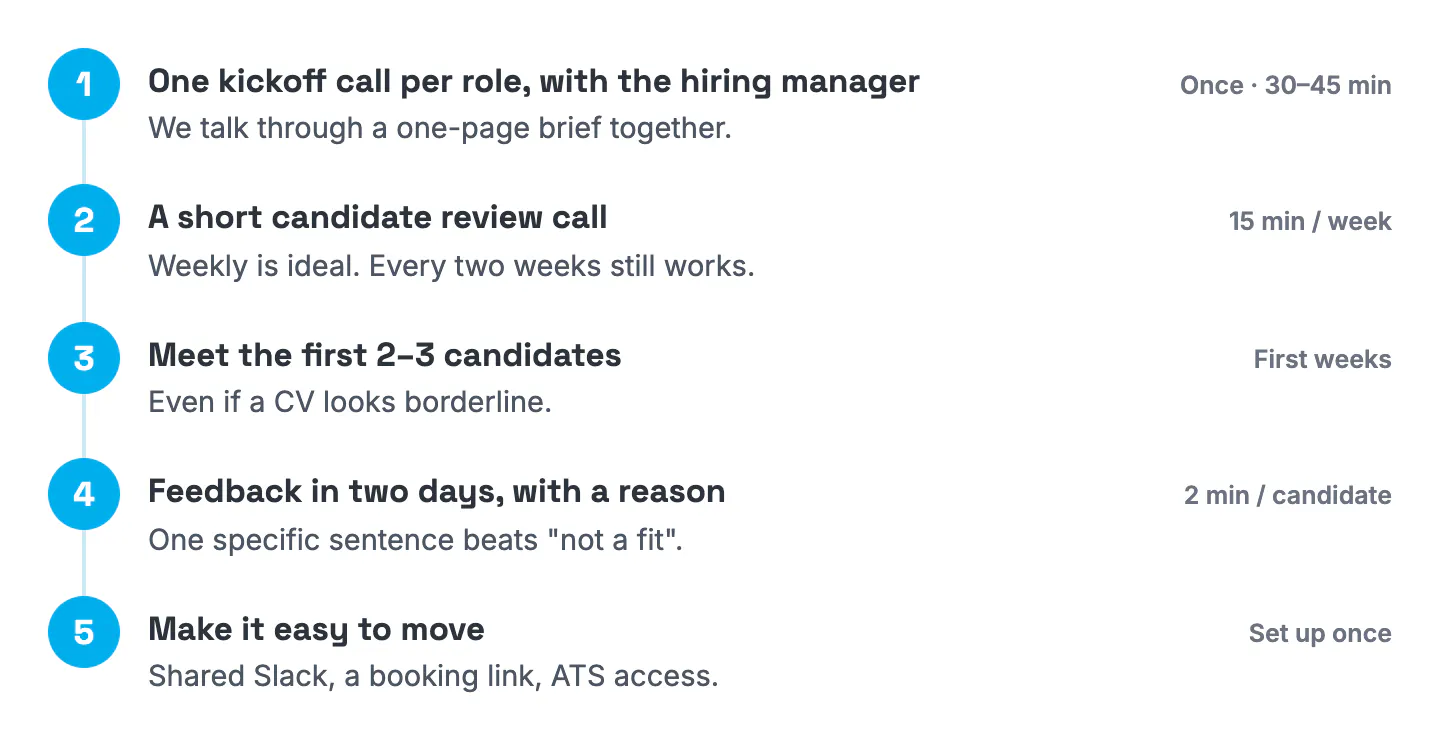
How much time do you actually need to put in?
Less than you'd think, but not zero. This is roughly how it plays out. With no regular contact, the agency works from the job description and guesses. A short call every two weeks gets you most of the way. Around 15 minutes a week, the shortlist is sharp. Past half an hour, extra time barely moves anything, so we won't ask for it.
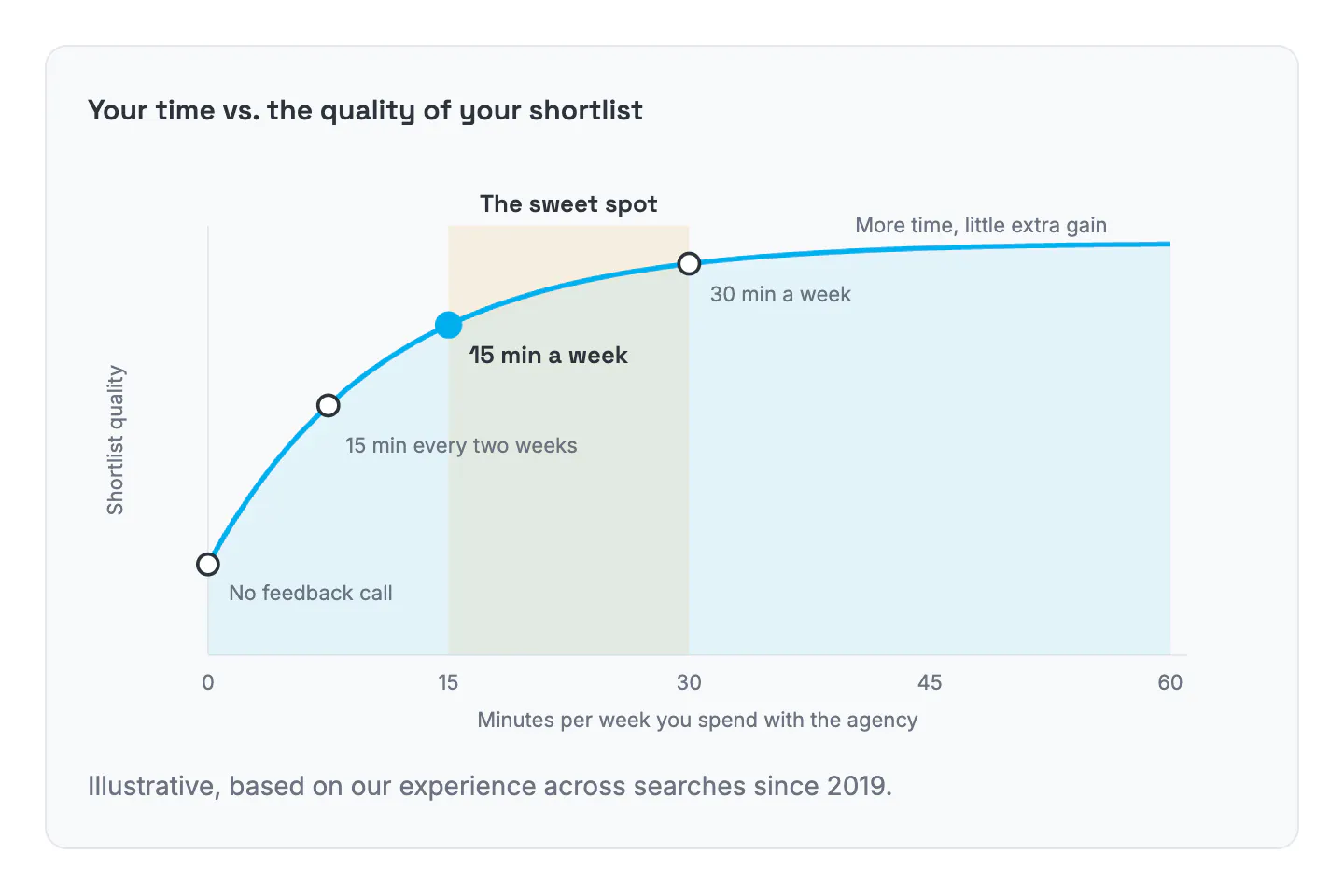
Illustrative, based on our experience across searches since 2019. Not a measured dataset.
1. Start with a proper kickoff call
This is the habit that matters most. Most roles arrive with a job description that was written for a job board. It lists technologies. It rarely says why the role exists, what the person will do on a Tuesday, or which trade-offs you'd accept.
So before we contact a single candidate, we spend 30 to 45 minutes with you talking through a one-page brief. You don't need to write anything. We ask the questions, write it up, and you check it afterwards. The call is recorded so nothing gets lost.
Two things make this call work:
- The hiring manager is on it. Your recruiters and HR team know a lot, but the person the new hire will report to knows what they actually need. When we only hear it second-hand, we're working from a summary of a summary.
- One role per call. Two roles in one short call means both get half the attention, and the differences between them get blurred.
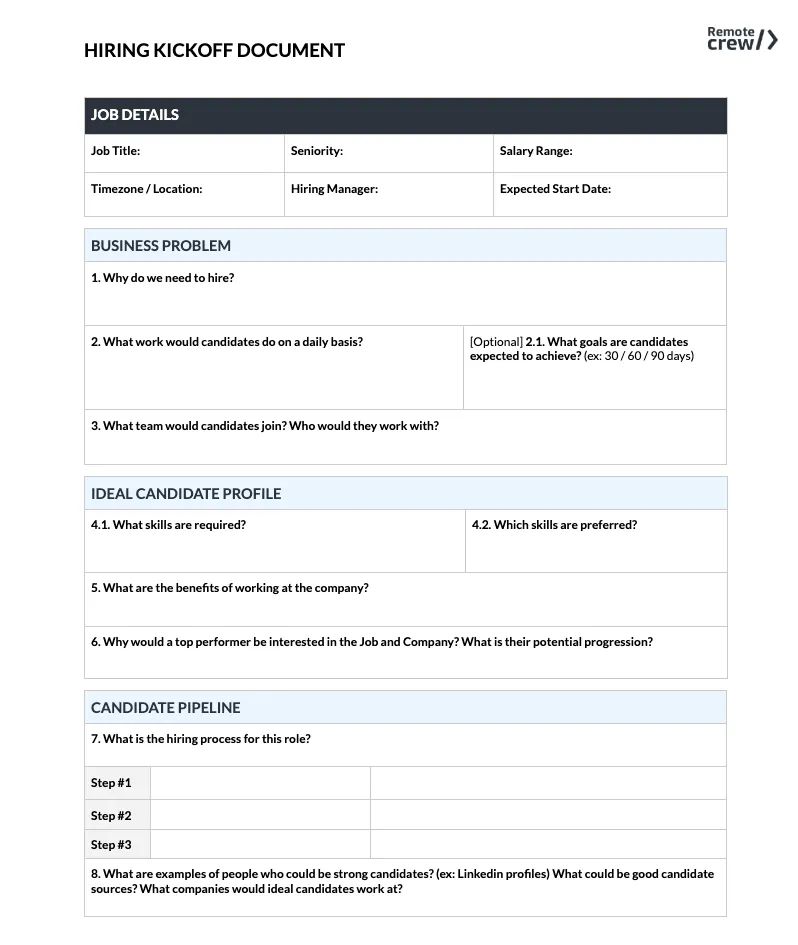
The one-page brief we discuss together. Question 6 is the one most teams haven't thought about: senior engineers rarely apply to jobs, so we have to give them a reason to reply.
2. Keep a short, regular review call
A search is a learning loop. We share candidates, you share feedback, and we adjust the search. Each turn of that loop makes the next shortlist better. The faster it turns, the faster you hire.
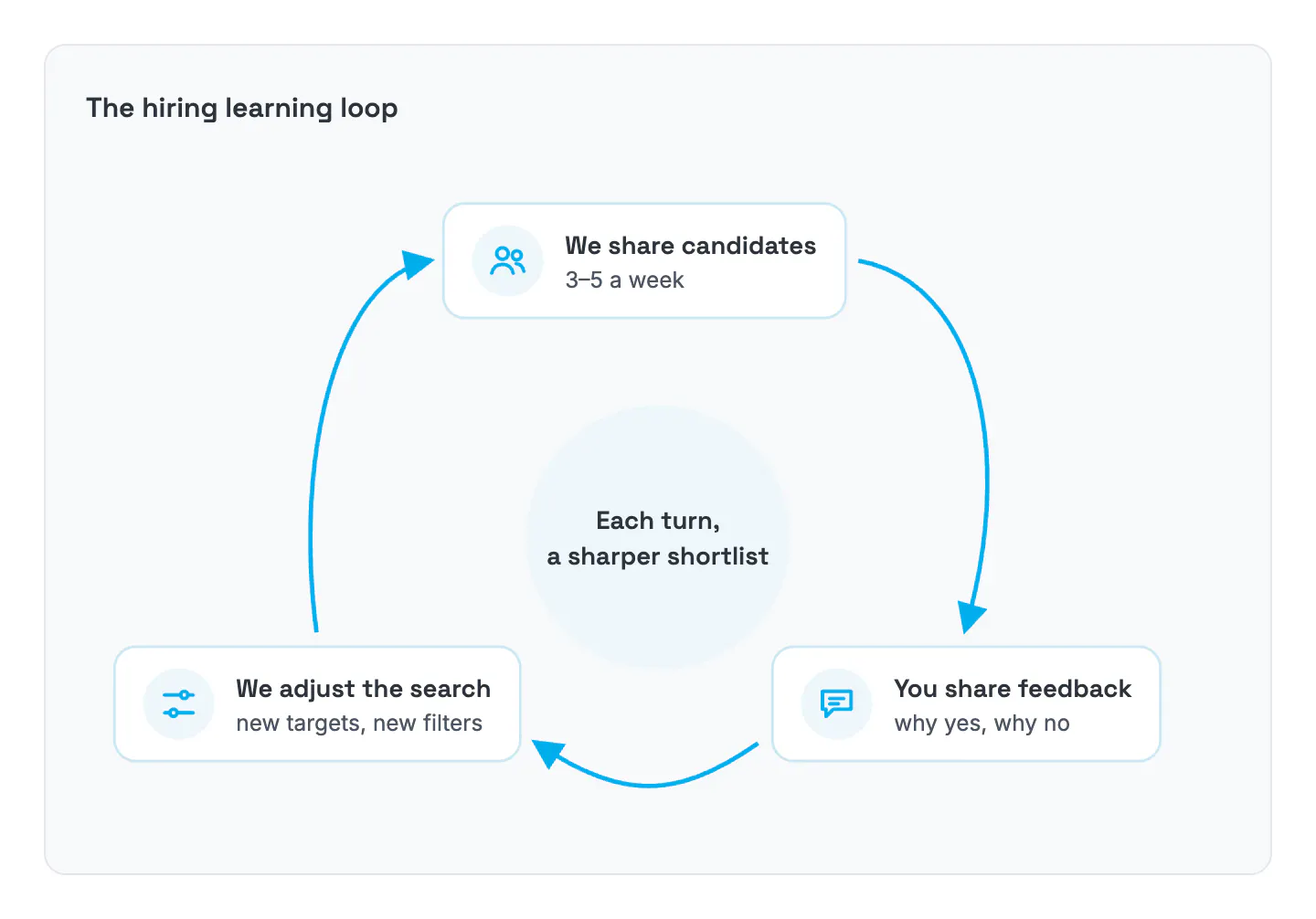
Feedback over email or in an ATS tends to be short, because everyone is busy. On a call, a five-word comment turns into a two-minute explanation, and those two minutes are what we need to change course.
One of our clients put it well in a message to their own team. They didn't want resumes "thrown over the wall". They wanted a kickoff call, a weekly call to go through the top new candidates, a preview email the day before so people could glance at CVs, and feedback logged where both sides could see it. Their reasoning was that this boxes in the time the team spends on hiring, and the rest of the week stays free.
We usually suggest 15 minutes. Some teams like 30. If weekly is too much, every two weeks still puts you well ahead of no call at all.
3. Meet the first few candidates, and tell us why
The first 2-3 candidates do a different job from the rest. They show us where your bar really is. That's why we ask you to meet them even if a CV looks a little short of what you want.
We've spoken to every candidate before you see them, so we know things the CV doesn't show. Plenty of strong engineers write weak CVs. We send interview notes, but we know most people don't have time to read them closely.
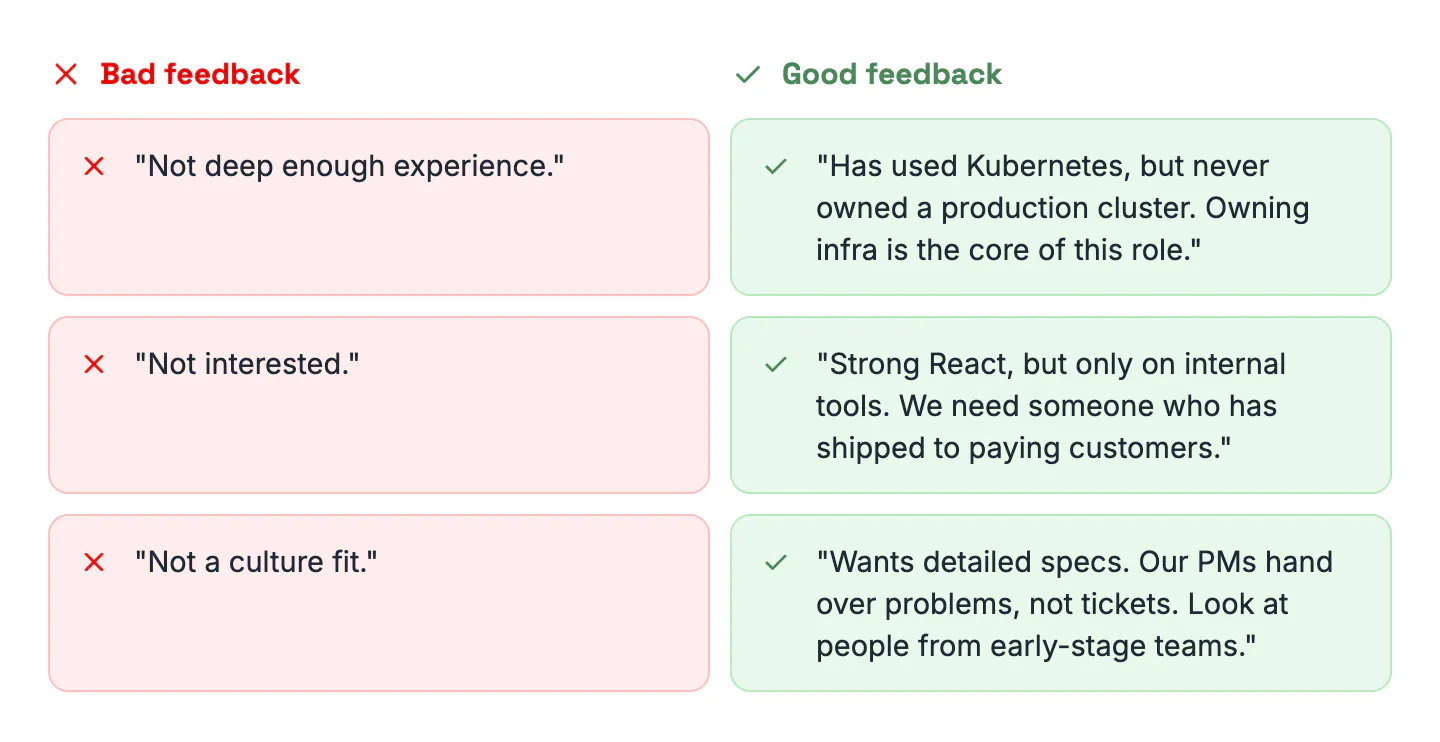
And whatever you decide, the reason is what helps us most. Compare these:
Speed counts too
The engineers you want are talking to other companies at the same time. When feedback after an interview takes more than a few days, the best ones often accept somewhere else while they wait. Two days is a good target. A quick "yes, next round" in Slack is enough to keep things moving.
A search that taught us all of this
Here's a real example, with the name left out. A US software company asked us to help with two engineering roles. They were busy, which is exactly why they came to us. Here's what happened, and what we'd do differently next time.
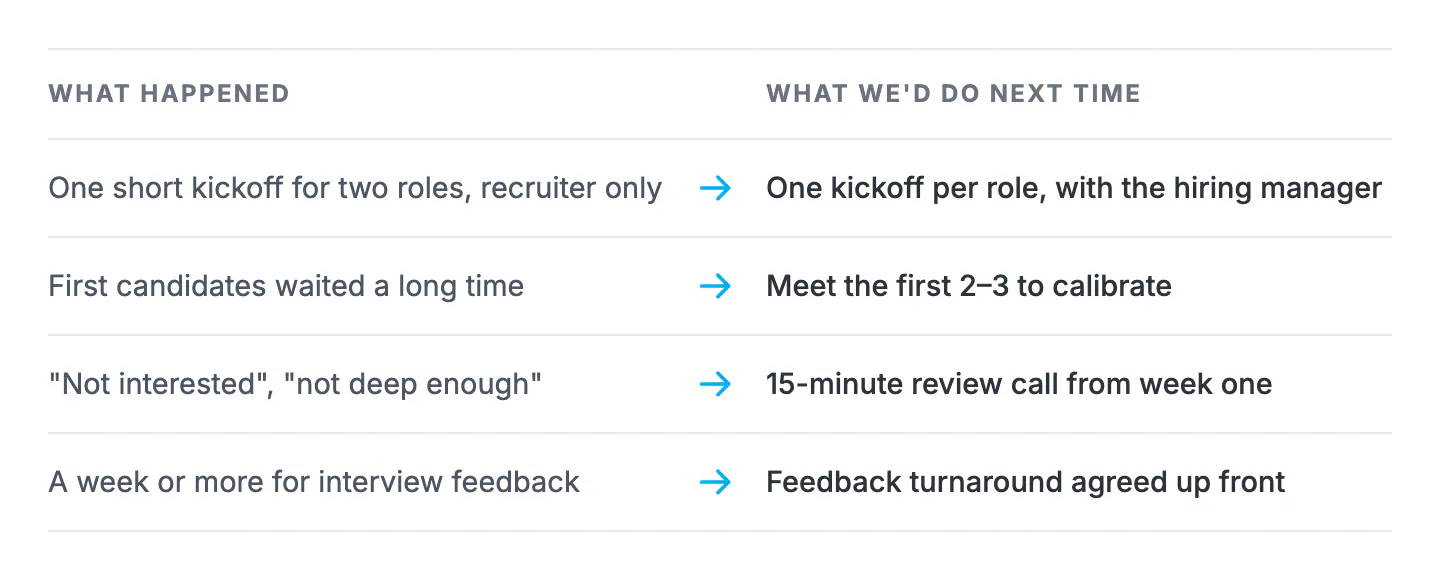
Part of this is on us. We should have pushed harder for the hiring manager on the first call.
None of this came from a lack of goodwill on their side. Everyone had other priorities, and hiring slipped. But every gap slowed the loop, and the search took longer than it needed to. The fix would have cost them maybe an hour in total over the first two weeks.
What you should expect back from your agency
This works both ways. If you give an agency these 15 minutes, here is what you should get for them. These are the standards we hold ourselves to.

The market pay comes from real data: see our software engineer salaries in Portugal. The stage data is the same recruiting funnel we track on every search, and the guarantee is on our pricing page.
Common questions
How much time does working with a recruitment agency take? About 30 to 45 minutes for a kickoff call per role, then around 15 minutes a week for a candidate review call, plus the interviews themselves. More than 30 minutes a week rarely improves results.
What should happen in a recruitment kickoff (intake) call? The agency and the hiring manager agree on the job details (title, seniority, salary range, location, start date), why the role exists and what the person will do day to day, the required and preferred skills, why a strong candidate would want the job, and the interview process. It takes 30 to 45 minutes per role.
Does the hiring manager need to be on the kickoff call? It helps more than anything else. The hiring manager knows what the role needs day to day. Without them, the agency works from a second-hand summary, and the first shortlists are usually further off.
What if we can't do a weekly call? Every two weeks works. You'll get most of the benefit. What hurts results is having no regular call at all, because feedback then arrives slowly and without detail.
What makes good candidate feedback? One specific reason, given within two days. "Never owned a production cluster" lets the agency adjust its search. "Not a fit" doesn't.
Hiring senior engineers?
We help companies in Europe and the US hire mid-level and senior engineers from Portugal, Europe and Latin America. Book a call and we'll start with the kickoff brief.
Written by
Tech hiring insights in your inbox
From engineers to engineers: helping founders and engineering leaders hire technical talent.
We will only ever send you relevant content. Unsubscribe anytime.